- We work in a complex environment. There are three fundamental sources of complexity in healthcare: data, processes, and medical knowledge. Glaser, J. (2013). Managing complexity with health care information technology. H&HN Daily.
- Data complexity can be addressed by standardizing collection & highlighting relevant data (like patient questionnaires)
- Process complexity can be addressed by “data liquidity” and accessibility for clinicians, but also require IT back office support (integration of health applications across sites)
- Medical knowledge complexity cannot be completely resolved by sub-specialisation (which turns into care fragmentation). All clinicians should have access and know how to use clinical decision support algorithms & guidelines
- We work in “grey-space”.
- For your health, take a walk (maybe even have a “walkshop” meeting) around the natural space adjacent to the hospital, and recommend the same to colleagues and patients. (Prescott 2016 Int. J. Environ. Res. Public Health)
- We need to be ready for more waves of COVID.
- Health care workers have a twelve-fold increased risk of having a positive SARS-CoV-2 test compared to the general community (Nguyen 2020 Lancet)
- Health care workers are somewhat protected from infected patients when they use appropriate PPE. However; questions remain about the risks of being infected either by a colleague or a member of their family.
- There has been a suggestion healthcare workers use masks all the time (Wang et al 2020 BMJ Global Health), even beyond the clinical environment, with others arguing this is too high a personal burden on healthcare workers (Remaly, 2020 Medscape Medical News)
Wednesday Learnings
MALS is a rare chronic abdo pain syndrome
- Median Arcuate Ligament Syndrome (MALS) is a rare syndrome of intermittent (often post-prandial) abdominal pain putatively caused by kinking of the coeliac artery by the median arcuate ligament of the diaphragm. It can be associated with vomiting and weight loss.
- Publications out of North America discuss minimally invasive surgical treatment.
- Related is SMA (superior mesenteric artery) Syndrome, which can occur after acute weight loss, where loss of the duodenal fat pat leads to compression of the duodenum between the SMA and the aorta.
- These conditions are so rare there is no established clinical expertise in WA in dealing with MALS, although SMA syndrome is occasionally recognised in adults.
Peanut allergy is really common
- Peanut allergy affects 3% of children.
- 20% of children will have allergy remission by age 5y – with the greatest chance in those with a SPT <6mm, or serum peanut specific IgE <3kUA/L (Ho et al. 2008 JACI)
- There is good evidence that for infants with severe eczema and/or egg allergy, that regular peanut intake before 12 months of age can reduce the risk of developing peanut allergy
Consider Ideal Body Weight (IBW) in paediatric prescribing
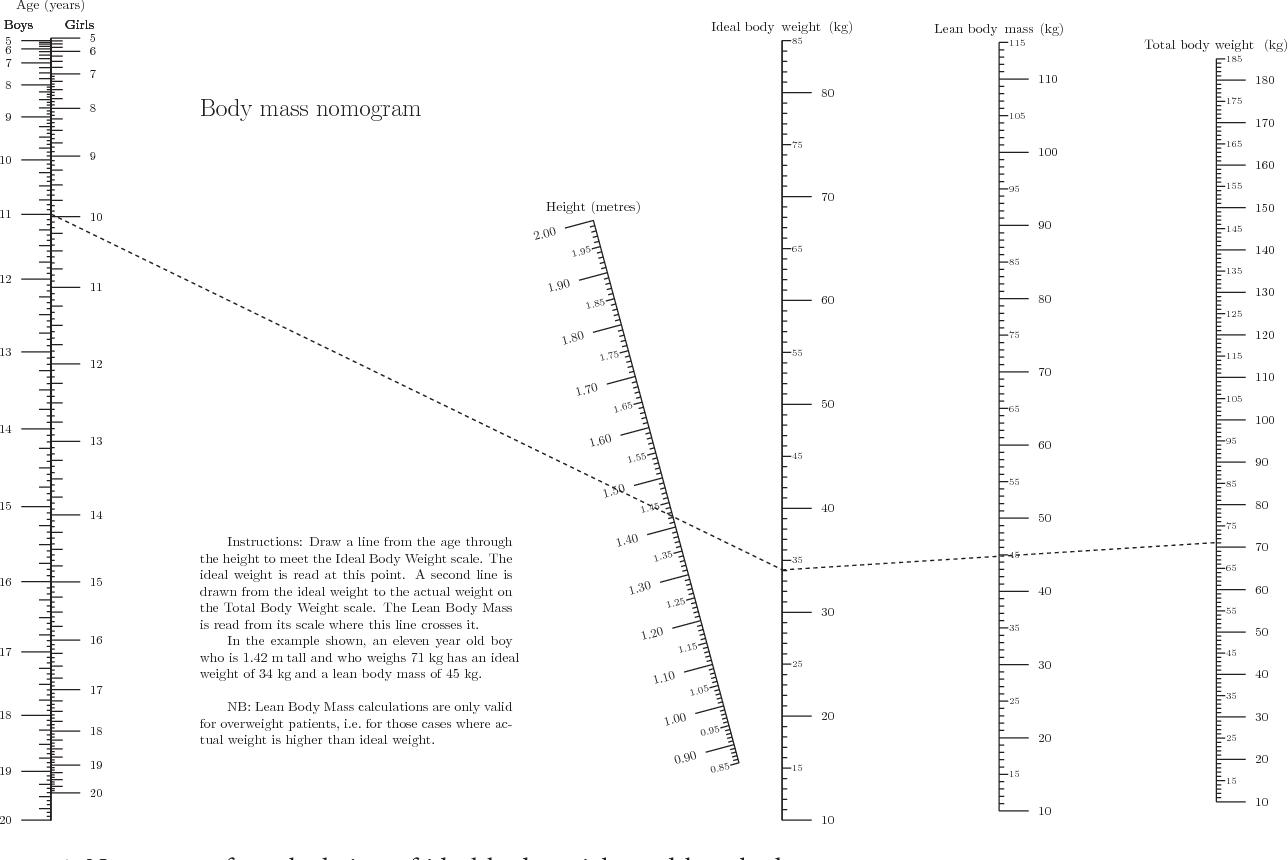
- Use the Ideal Body Weight (IBW) when prescribing in obese and overweight children
- 24% of Australian children are overweight or obese (overweight 17%; obese 8%) (AIHW 2019)
- Paediatricians can improve their prescribing habits in this regard.(Collier 2017 ADC)
- IBW can be calculated via a variety of methods:
- Moore method – ascribing the IBW as the weight percentile corresponding to the child’s height percentile.
- McLaren Method – using the 50th percentile weight for the child’s height
- Nomogram (Callaghan 2015) – which is available here
- DFTB has a nice succinct list of medications where dose calculation needs particular care.
- There is ongoing discussion about which method is best (Moylan 2019 JAMA Pediatrics)
Check the perineum in refractory constipation
- Anorectal malformations can contribute to constipation.
- The anal position index (API) can be used to determine whether the anus is “ectopic”
- Davari, H. A., & Nazem, M. (2004). The anal position index: a simple method to define the normal position of the anus in neonate.
- Girls API is measured by – Anus-fourchette/coccyx-fourchette
- The anus is in an abnormal position if the API is <0.29.
- Boys API is measured by – Anus-scrotum/coccyx-scrotum
- The anus is in an abnormal position if the API is <0.4.
- Girls API is measured by – Anus-fourchette/coccyx-fourchette
- The most commonly cited classification system for anorectal malformations is the “Krickenbeck” classification system – but there is an interesting history of various classification systems and a whole bunch of pictorial classification diagrams on the internet
Tachydysrhythmias – know where your ECG machine is.
- Tachydysrhythmias can sometimes present without palpitations being the main concern – it may be a headache (older child) or poor feeding (in an infant)
- ECGs are easy to get in a hospital – there are machines in multiple locations and it behoves the clinician to know where to find them.
- A pithy summary of the complication of tachycardiomyopathies is available in the Heart journal (Martin & Lambiase 2017)
Cerebral Palsy Resources for generalists
- There are some great cerebral palsy resources out there:
- The Cerebral Palsy Alliance has a nice infographic overview of CP.
- For more detailed clinical information, have a look at the Australasian Academy of Cerebral Palsy and Developmental Medicine web resources, which has a great collection of information for generalists, as well as specialised documents for the 6% of CP patients who have dyskinesia
- Considering pain affects 75% of people with cerebral palsy, it is a vital consideration in any acute change or hospital presentation.
Wed 19 Feb 2020
Rheumatic Heart Disease can present purely with chest symptoms.
- Acute Rheumatic Fever can present as isolated chest pain & cardiac features, and no fever, no joint symptoms.
- It can be worth getting a second opinion regarding imaging investigations when there is a clinical suspicion of a high morbidity diagnosis.
- There is a high incidence of ARFv in the Kimberly currently, anecdotally, although WA historically compares similarly to other Australian states.
- Remember the 2012 Australian Acute Rheumatic Fever Guidelines, which are available as an app both on iOS, and Android.
Mediastinal neoplasia, rouleaux, instincts, & coding…
- Thoracic neuroblastoma or lymphoma can present as a pneumonia – the symptoms of fever, malaise are from chemokines produced by the neuroblastoma or the lymphoma, and may or may not be accompanied by respiratory infection.
- RBC rouleaux effect means the RCC will be lower and not be accurate, the MCV may be increased
- “Osmosis” is a Youtube channel which posts short videos which can be useful for learning and revision by video
- If you have a clinical instinct something is not quite right, then consult your peers. This form of “problem wary” bias (like: “What if it’s lymphoma?”) is good for the patient, whereas the counter bias (like: “it’s probably just pneumonia”) is not so good for patients (Elstad 2010). The way we translate that in patient/family education is a different skill.
- For coding benefits, document diagnostic & treatment associations by writing “…due to…” statements in the medical record…
Wed 5 Feb 2020
Novel Coronavirus
| Perhaps it behoves us to be aware of the resources available regarding novel coronavirus (2019-nCoV): – The Federal Department of Health has regular national updates – The WA Department of Health has factsheets for a variety of audiences – Watch the outbreak on the disease map, courtesy of HealthMap & co. – NEJM has collated a bunch of articles regarding the outbreak so far. |
 fshnchps